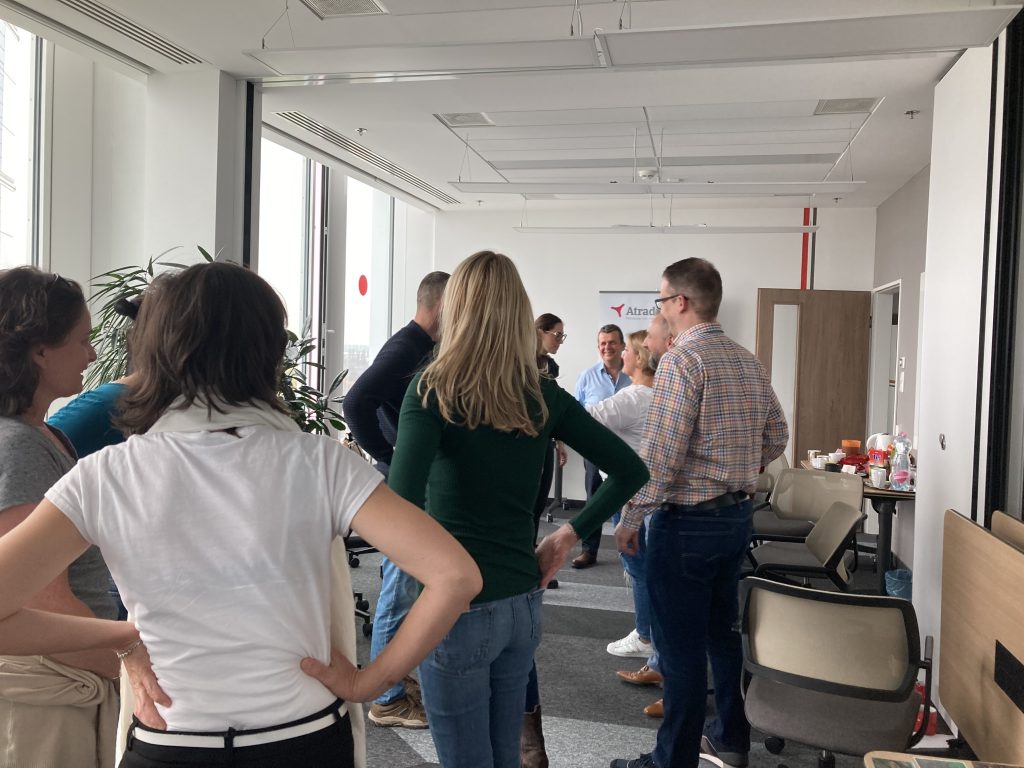
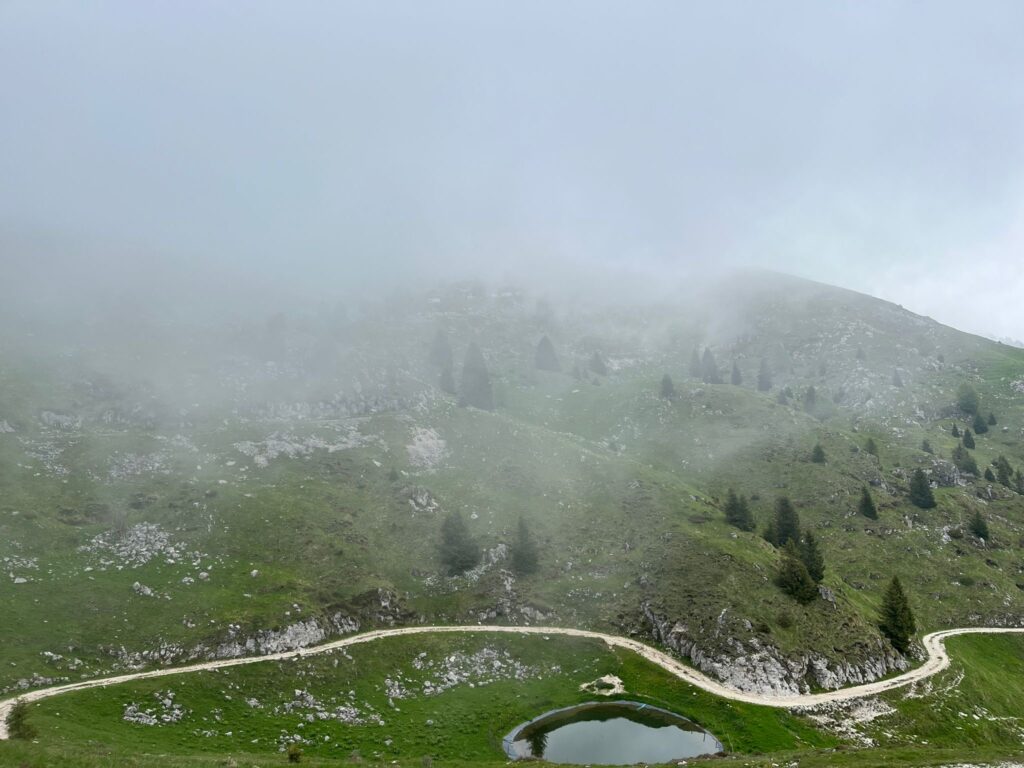
It happened one fine summer day a few weeks ago that a group of us were cycling up Monte Grappa in the Dolomites, the day before Giro d’Italia. The mountain didn’t give in easily, we reached the top in zero degrees and rain, just the way we like it:).
In the evening we were having our usual tired-but-euphoric dinner, when under the influence of what we had experienced during the day we already made big plans for next year’s bike ride. And since everyone here apart from me is a triathlon champion or ultra runner, they listed the challenges that they will be facing this year, until finally the competitive self in me woke up, and although originally I had planned to do a few laps of running in Bikás-park and a short bicycle ride between Balatonberény and Máriafürdő, now peer pressure kicked in, so I found myself saying (don’t ask me why) “well, I’ll do the human flag”. The stunt called the human flag is called that for a reason, it looks like this:

Yes, I know what you’re thinking, so am I know, except that then it was a balmy night, I felt really chilled, and before I knew it I’d said it. So there was nothing else to do, last week I went up to the girl at the gym who had the strictest look on her face during training and asked her if she knew what a human flag was and if she could prepare me for that. Turns out she really does know what it is, and it’s really visible on her body. She was hesitating for a few seconds, looked me up and down, and finally (and sceptically) she answered: “Well, it won’t be easy but let’s give it a try.” I took that as an encouraging yes, so we set a target date of early February 2025 (my birthday), and to reinforce my own commitment I decided to follow the process through with a series of articles, describing what this 35-week ride would teach me. And since I’m reading the book The Joy of Movement by Stanford health psychologist Kelly McGonigal, I thought it would be a great scientific underpinning for this journey.
The book covers movement in 7 chapters (The Thrill of Endurance, Getting Fit, Sharing Joy, Let Me Move, Overcoming Obstacles, Loving LIFE, How to Become Persistent), so if I spend five weeks on each aspect, I’ll be done by February. I believe that understanding what is happening inside us and why (and books like this, strongly supported by research, are a good tool for this) will contribute a lot to the success of the process, and that awareness will allow us to apply what we learn here to other areas and situations in our lives.
So I’ll be back in 5 weeks with the first chapter and the lessons of my own efforts on the relationship between perseverance and thrill, and until then I’ll try to look at the picture above and the now scary looking flag posture as little as possible, and do as many push-ups as possible. At the same time, I hope that the points raised in these articles will also pose you questions about your own efforts and that you will get insight into new and useful connections.
Finally, a teaser on the first chapter of the book:
● it gives us an understanding of exactly how much physical exertion is neither too much nor too little to really supply us with the hormones that will significantly improve our quality of life in the long run;
● it will also be discussed how even a practically individual sporting activity can create a cooperative buzz, and what the implications of this are for team-player skilfulness;
● and finally a surprising fact: you are better at sharing when you do sports, and this is important because the altruism required by the ancient evolutionary gesture of sharing is an essential element of all teamwork at work.